


7 Unexpected Things You’ll Only Experience in Tbilisi
7 Unexpected Things You’ll Only Experience in Tbilisi
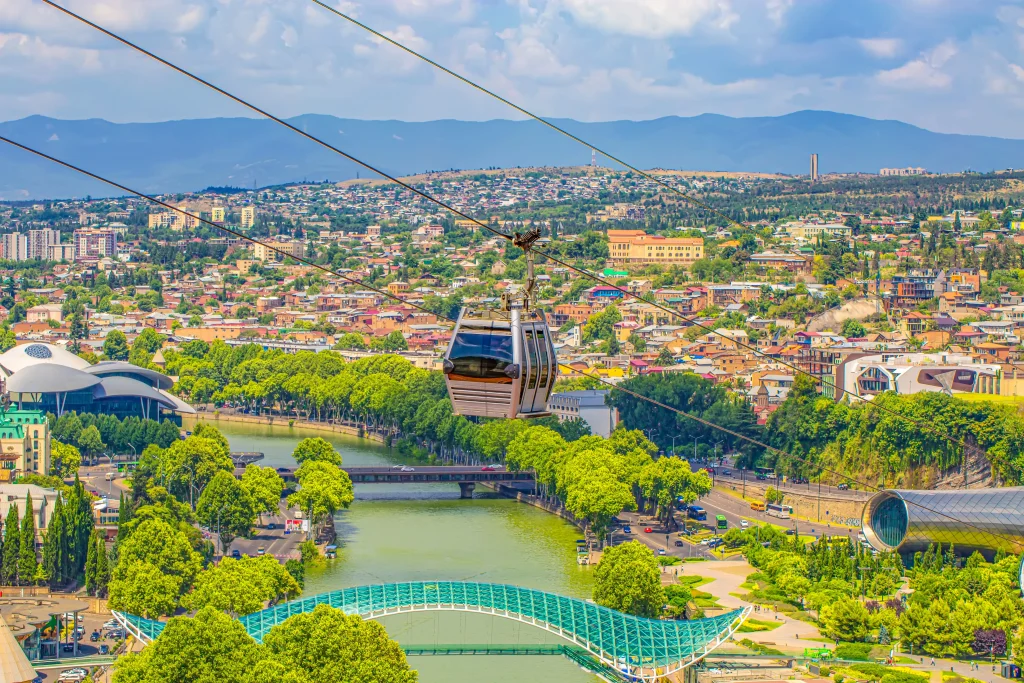
Tbilisi is a city where ancient history meets avant-garde culture. From the sulfur-scented air of Abanotubani to the gravity-defying architecture of the Public Service Hall, it offers experiences unlike any other. This guide reveals 7 unexpected things that make the Georgian capital a one-of-a-kind global destination in 2026.
Book a consultation now



Tbilisi is not a city that reveals itself all at once. It is a layered masterpiece, where Persian, Soviet, and ultra-modern influences collide in a way that feels both chaotic and perfectly intentional. In 2026, while the city has embraced its status as a top-tier European tech and tourism hub, it has stubbornly held onto its quirks.
If you are visiting or moving to the Georgian capital, you might expect the wine and the mountains. But there are certain things – small, strange, and beautiful – that you simply won’t find anywhere else on Earth. Here are seven unexpected experiences that define the soul of Tbilisi.
1. The Fragrance of Foundations: Sulfur and Legend
Most cities are defined by their skyline; Tbilisi is defined by its scent. In the ancient district of Abanotubani, the air is thick with the smell of sulfur. Legend has it that King Vakhtang Gorgasali founded the city here in the 5th century after his falcon fell into a hot spring during a hunt.
Walking over the brick domes of the bathhouses, you are literally standing on the heat that powers the city’s history. In 2026, these baths remain a social centerpiece. Entering a subterranean, turquoise-tiled chamber for a “kisa” (a vigorous traditional scrub) is a sensory reset that feels like traveling back a thousand years, even as the 5G signal remains perfect outside the dome.
2. The Leaning Tower of Puppets
In the heart of the Old Town stands a structure that defies the laws of physics and architectural logic. The Rezo Gabriadze Puppet Theater’s clock tower looks like something out of a fractured fairytale – tilted, held together by an iron beam, and adorned with a massive gold-painted pomegranate.
Every hour, a small window opens, and a mechanical angel strikes a bell. Twice a day, a puppet show titled “The Circle of Life” plays out for the crowds gathered below. It is a moment of pure, unadulterated whimsy that encapsulates the Georgian love for storytelling and “the beauty of the imperfect.”
3. The Vertical Neighborhoods: Coin-Operated Elevators
For many expats moving into Soviet-era high-rises in Saburtalo or Varketili, the first “culture shock” happens inside the elevator. Many residential buildings in Tbilisi still operate on a coin-pay system. You enter the lift, drop a small coin (usually 5 or 10 Tetri) into a metal box, and only then do the buttons become active.
While modern buildings in 2026 have transitioned to digital keycards, these “pay-as-you-go” elevators remain a classic Tbilisi experience. It’s a literal lesson in the cost of movement and a quirky reminder of a time when communal services were managed with local ingenuity.
4. The Dry Bridge: A Living Museum of the 20th Century
The Dry Bridge Market is not a “flea market” in the traditional sense; it is a sprawling, outdoor archive of human history. On any given weekend, you can find a Soviet-era medal lying next to a 19th-century German camera, a hand-woven Kakhetian rug, and a collection of dental tools from the 1970s.
The vendors, many of whom have occupied the same patches of pavement for decades, are walking encyclopedias. Negotiating for a piece of vintage jewelry or a rare vinyl record is a social ritual. It’s a place where the 20th century hasn’t quite ended, and everything – from old family photos to space-race memorabilia – is for sale.
5. Architectural Brutalism Meets the Space Age
Tbilisi’s architecture is famously schizophrenic. One of the most unexpected sights is the former Ministry of Transportation building (now the Bank of Georgia headquarters). It looks like a giant game of Jenga played with concrete blocks.
Then there is the Public Service Hall, often called “The Mushroom Building” due to its massive, overlapping white canopies. In 2026, these structures are symbols of a city that refused to follow the rules of “standard” urban design. Seeing a 6th-century church framed by a 21st-century glass bridge is a visual jolt that you only get here.
6. The “Secret” Wine Cellars of the Old City
In most world capitals, wine is something you buy at a shop or order at a bar. In Tbilisi, wine is a topographical feature. As you walk through the hilly streets of Sololaki, you will see small, unassuming wooden doors leading into basements.
Often, these are family-owned maranis (wine cellars) where the wine is stored in qvevri – massive clay jars buried in the floor. You might walk in for a quick look and find yourself an hour later, sitting on a stool, tasting a 12.5% amber wine while the owner explains their family’s 200-year-old fermentation process. In Tbilisi, the distance between “stranger” and “dinner guest” is remarkably short.
7. The Skybridges of Nutsubidze
Tbilisi is a city of hills, and Soviet engineers solved the problem of steep inclines with “Skybridges.” In the Nutsubidze Plateau, three massive residential towers are connected by high-altitude metal bridges.
Walking across these bridges – high above the city streets – is a dizzying and surreal experience. It’s a piece of “utopian” urban planning that turned the sky into a sidewalk. For photographers and urban explorers, these bridges offer a perspective of the city that is haunting, futuristic, and uniquely Georgian.
Conclusion: The City of Contrasts
Tbilisi is not interested in being “the next Berlin” or “the new Prague.” It is content being itself – a place where you pay for your elevator with a coin, drink wine from the ground, and walk through the air to get home. In 2026, as the world becomes more homogenized, Tbilisi’s commitment to its own strangeness is its greatest asset.
When you visit, don’t just look at the monuments. Smell the sulfur, listen for the puppet’s bell, and never turn down an invitation to a basement cellar. It is in these unexpected moments that you will find the real Tbilisi.